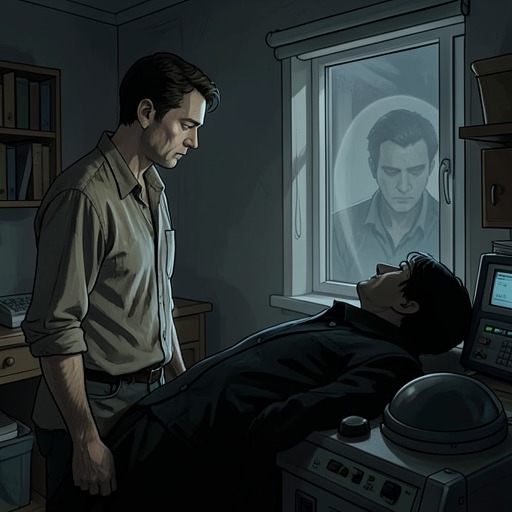
Hallowmass Sacrifice Makes Body Exchange Permanent
The Thing on the DoorstepHallowmass Sacrifice Makes Body Exchange Permanent is the occult rule Edward Pickman Derby invokes to explain why a body exchange could become irreversible. In his account, the rite’s connection to Hallowmass changes a contested, potentially reversible transfer into permanent possession; after Asenath Waite’s death, he believes its power can still take effect through her surviving soul. The rule supplies the deadline behind Derby’s fear and the logic of the story’s final reversal, although Daniel Upton hears it as testimony rather than witnessing the rite himself.
The Claimed Rule
Derby describes personality exchanges as a means by which one person can explore distant and forbidden places, and he associates Asenath with the ability to cause such changes. His accounts include being displaced from his own body and finding himself in a remote ritual setting. These episodes establish the exchange as something he considers already possible; Hallowmass matters because, in his view, a sacrifice can make the transfer permanent.
The distinction is between an exchange that can occur and one that can no longer be undone. Derby fears that, at Hallowmass, Asenath would become him permanently, while he would be left in her body. He also believes this outcome would give her the human male form she desired. These are Derby’s claims about the rite’s effects, not details confirmed by Upton through direct observation.
Timing and the Maine Ordeal
Derby places the threatened ceremony at a Sabbat beyond Chesuncook. His account of an earlier ordeal there includes being taken against his will to a cult site, where he reports witnessing a ceremony and encountering an entity that changed shape. The episode makes his fear of Hallowmass more than an abstract suspicion: he believes Asenath can transport him into such a setting and expose him to its rites.
The calendar supplies a point of no return. Derby tells Upton that the sacrifice at Hallowmass would have completed the exchange, leaving no opportunity to recover his original body. The narrative does not establish that Upton attended the ceremony or saw its procedures; the place, participants, and claimed effect reach him through Derby’s distressed account.
The Rule After Asenath’s Death
Derby says he killed Asenath before the feared Hallowmass outcome and concealed her body in a cellar storeroom at Crowninshield House. For a time, he believed he had escaped the danger. He later concluded that Asenath’s soul—or, as he suspected, Ephraim Waite’s—could persist after bodily death and continue the exchange. In his explanation, her death had not ended the threat because the Hallowmass sacrifice could still work after the appointed time, even without her physical presence at the rite.
That interpretation explains why Derby believes the change takes hold while he is confined at Arkham Sanitarium. He says he awoke in Asenath’s buried body and understood that she had taken his body there, beyond the point at which the exchange could be reversed. He escapes in that account to warn Upton that the person in his body is no longer Edward Derby. The rule therefore extends beyond a planned ceremony: as Derby understands it, its effect can persist after Asenath’s death and complete itself at a distance.
Evidence and Narrative Significance
The rule is delivered through a chain of testimony and aftermath. Upton hears Derby’s warnings and later receives a written message explaining the exchange; he does not see the Hallowmass rite or independently establish how it works. The story does provide physical evidence that Asenath’s body remained concealed: the remains found inside the clothing of the collapsed messenger include a skull identified as hers by dental work. That identification supports the distinction between the dead Asenath and the person Derby says occupies his body, but it does not verify the occult mechanism.
Hallowmass thus functions as both a deadline and an explanation for the apparent finality of the exchange. Derby’s earlier fear that the rite would secure Asenath’s possession is echoed by his later belief that the same power has acted after her death. Because the rule comes chiefly from his account, its supernatural operation remains uncertain; within the story, however, it transforms his effort to escape into a warning that the transfer may continue from body to body.